
Published
What is a 1 phase prop firm and is it actually worth it?

The decision traders face when choosing this path comes down to four variables: Challenge fee, profit target, drawdown limits, and payout speed. Getting any one of these wrong can wipe out your challenge fee before you reach a funded account. This guide breaks down exactly what to evaluate and where the real traps lie.
What is a 1 phase prop firm and how does it work?
Quick answer
A 1 phase prop firm is a proprietary trading firm that grants traders access to a funded account after completing a single evaluation challenge, rather than the two or three stages used by traditional firms. Traders pay a one-time fee, hit a set profit target while respecting loss limits, and then trade the firm’s capital.
The fee to enter a challenge varies by account size, and the funded account itself carries ongoing rules, including maximum position sizes and sometimes minimum trading day requirements. Understanding these upfront is covered in more depth in this guide to proprietary trading challenges and how to pass them.
Single-stage evaluation removes one major psychological hurdle.
Here’s the thing: Most traders who fail two-phase programmes don’t fail on skill. They overtrade during stage two because they feel pressure to maintain momentum, and that is exactly when they breach a drawdown rule. A 1 phase model removes that second pressure point entirely.
What are the key rules and targets in a 1 phase prop firm challenge?
Quick answer
A 1 phase prop firm challenge usually combines one profit target with daily-loss and maximum-drawdown limits. It may also set minimum trading days, a completion deadline, and restrictions on news trading, overnight positions, or weekend holding. Exact thresholds vary by firm, so compare the full rule set before paying the challenge fee.
The rules across 1 phase programmes follow a consistent framework, though the exact percentages differ by firm. The table below shows the typical structure you should expect to compare when evaluating any programme:
- Minimum trading days: Some firms require a minimum number of trading days to prevent high-frequency gaming of the challenge.
- Time limit: Many challenges have a maximum duration, often 30 to 60 days, though some are unlimited.
- Prohibited instruments or strategies: Certain firms restrict news trading, overnight holds, or weekend positions. Read this before you pay.
Drawdown rules are where traders most commonly fail. As the U.S. SEC’s Investor.gov (opens in new tab) makes clear, leverage amplifies both gains and losses, and in a prop challenge context that means a single leveraged position gone wrong can breach the daily drawdown ceiling before you’ve had time to react. Solid prop trading risk management is not optional here, it is the challenge.
It is not.
How does a 1 phase prop firm compare to 2-phase models?
Quick answer
A 1 phase prop firm reaches the funded stage faster than a 2-phase model because there is only one evaluation to pass. Two-phase programmes typically require a higher combined profit target across both stages but often use lower individual targets per phase, which can suit more conservative trading styles.
The tradeoff is straightforward. One phase means a shorter path to funded capital, but the single challenge often carries a slightly higher profit target or stricter conditions than either individual phase of a two-stage programme. Two-phase models spread the evaluation burden across more time, which some traders find less stressful, though the total fee exposure can be higher if a reset is needed.
The right model depends on your trading style, not on which sounds easier.
Table: Qualitative comparison based on typical industry programme structures. Individual firm rules vary, verify before purchasing.
Traders who want an even faster route to capital should also review prop firms offering instant funding, where no evaluation is required at all. That model carries different conditions and higher ongoing fees, so it suits a specific type of trader.
How do you choose the best 1 phase prop firm for your trading style?
Quick answer
Choosing the best 1 phase prop firm means matching the firm’s drawdown limits, profit targets, payout schedule, and permitted strategies to how you actually trade, not to how a firm’s marketing describes an ideal trader. A firm with a generous profit split means nothing if its rules prohibit the strategies you use.
Start with these four questions before paying any challenge fee:
- Does the drawdown structure match your trading frequency? High-frequency traders need wider daily loss limits. Swing traders need longer time limits or no time limit at all.
- Are your instruments and strategies permitted? If you trade news events or hold positions over the weekend, confirm explicitly that this is allowed. Many firms prohibit it.
- What is the payout schedule and minimum withdrawal? A funded account with a 60-day first payout delay and a high minimum withdrawal is a different product to one paying out in under two weeks. This guide on getting a funded forex trading account covers what to look for in payout terms.
- What is the reset policy if you fail? Some firms offer discounted resets; others charge full fee again. This directly affects your risk of ruin at the challenge stage.
If you are newer to prop trading and want to build skills before committing capital to a challenge, the structured approach outlined in practice day trading tools and the funded trading path is worth reviewing first.
Look, the lowest challenge fee is not automatically the best deal. Run the numbers before the marketing copy runs your decision.


Can you realistically earn consistent payouts with a 1 phase prop firm?
Quick answer
Consistent payouts from a 1 phase prop firm are realistic for disciplined traders with a verified positive-expectancy strategy. Traders who treat the funded account like a demo account, ignore drawdown rules, or lack a defined risk-per-trade framework typically fail to sustain payouts beyond the first one or two cycles.
The European Securities and Markets Authority (ESMA) (opens in new tab) has published data showing that a majority of retail CFD traders lose money over time, which matters here because prop trading is not an exception to the same behavioural patterns that drive retail losses. Overtrading, revenge trading after a loss, and position sizing errors occur at the same rate in funded accounts as in retail accounts, the difference is that in a prop account, those errors end the account rather than the bank balance.
What separates traders who sustain payouts from those who do not is not a secret strategy. It is rule-following. Keeping risk per trade below 1% of the account balance, trading only during sessions where your edge exists, and stopping for the day after a loss that reaches half the daily limit, these behaviours compound over time. One Eleonex community trader documented exactly this approach: Discipline, emotional control, and a simple trading method resulted in a $15,709 prop firm payout.
The exception to “consistency is achievable” is this: If your strategy requires very wide stops or drawdown to play out, a 1 phase prop firm’s tight loss limits will structurally prevent it from working. In that case, either the strategy needs adjusting or the firm model is wrong for you.
Why broker-backed 1 phase prop firms matter for your security
Not all 1 phase prop firms are built the same way. A growing number of the most reputable programmes are directly backed by regulated brokers, which changes the risk profile for funded traders in a meaningful way. When the firm operating your challenge sits within — or is closely affiliated with — a licensed brokerage, your trades are executed in a regulated environment rather than through a purely simulated structure with no oversight. That distinction affects everything from execution quality to how reliably payouts are processed.
When evaluating a 1 phase prop firm, it is worth asking explicitly whether the firm is broker-backed and, if so, which regulator covers that broker. Key indicators of a genuinely broker-backed model include:
- Trades routed through the broker’s live infrastructure, not a closed simulator
- Transparent identification of the parent brokerage on the firm’s website
- Payout processing handled through the same regulated entity
- Clear terms around what happens to your funded account if the firm ceases operations
Broker-backed firms tend to attract more serious traders precisely because the structural longevity is easier to verify. If the underlying brokerage has been operating for years and holds a recognised licence, the prop programme it supports is far less likely to disappear overnight.
What a 1 phase prop firm affiliate programme actually offers traders
Many 1 phase prop firms run affiliate or referral programmes alongside their core challenge products. These are worth understanding because they represent a secondary income stream that some funded traders use to offset the cost of challenge fees — or even generate income independently of their trading performance.
A typical affiliate arrangement works as follows:
- You receive a unique referral link after registering with the firm
- When another trader purchases a challenge through your link, you earn a commission — usually a percentage of the challenge fee
- Commissions are paid out on a schedule set by the firm, often monthly
- Some firms offer tiered structures where your commission rate rises as the number of referred traders grows
The practical value varies. If you are an active trader who discusses markets publicly — through social media, a YouTube channel, or a trading community — an affiliate programme can meaningfully reduce your net cost of participation. However, the core question when evaluating any 1 phase prop firm should still be the quality of its trading conditions, payout reliability, and rule structure. Affiliate income should be treated as a bonus, not a reason to recommend a firm you would not otherwise trust with your own capital.
Real trader results: what discipline inside a 1 phase structure can produce
One of the most common questions traders ask before committing to a 1 phase prop firm challenge is whether real people are actually generating meaningful payouts — or whether success stories are largely marketing. The honest answer is that consistent rule-following does produce documented results, though outcomes vary widely depending on strategy, account size, and market conditions.
As one example, a documented case covered by Eleonex shows a trader earning a $15,709 payout through discipline and patience — not through high-risk aggressive trading, but through methodical adherence to the firm’s rules over time. That kind of result is not guaranteed, but it illustrates that the model works when traders treat it seriously.
What tends to separate traders who reach consistent payouts from those who wash out at the challenge stage:
- Treating the challenge account with the same risk discipline they would apply to personal capital
- Not chasing the profit target aggressively in the final days of an evaluation
- Understanding that a 1 phase structure removes one evaluation layer but does not remove the need for a proven edge
- Scaling gradually rather than attempting to maximise a single account immediately
The 1 phase format shortens the path to funding, but the traders who succeed long-term are those who think like professionals from the first trade.
FAQ
A 1 phase prop firm is not objectively easier, it is structurally simpler. There is only one evaluation period, which removes the momentum pressure that causes many traders to overtrade entering a second stage. However, the single challenge often carries a profit target that is comparable to or slightly higher than either individual phase of a two-stage programme. Ease depends entirely on whether your trading style suits the specific rules, not on the number of phases.
Breaking a rule, most commonly breaching the daily drawdown limit, ends the challenge immediately and the account is closed. Most firms do not offer partial credit for progress made before the breach. Some firms offer a discounted reset option, allowing the trader to start a new challenge at a reduced fee, but this varies by firm and should be confirmed before purchasing.
They can be, but only if the beginner has first developed a tested strategy on a demo account and understands position sizing and drawdown mechanics in practice. Paying a challenge fee before those fundamentals are in place is an expensive lesson. Beginners are better served by building skills through structured practice, see this guide on practice day trading apps and the funded trading path, before committing real capital to a prop challenge.
Payout timelines vary significantly across firms. Some process withdrawals within a few business days of a request; others enforce a first-payout waiting period of 14 to 60 days after the funded account begins. The minimum payout amount also varies. Before selecting a firm, confirm the exact first-payout timeline and minimum withdrawal threshold in writing, these details are often buried in a firm’s terms and conditions rather than highlighted in marketing.
The best instant funding prop firm depends on the trader’s instrument preferences, risk tolerance, and required capital level. Instant funding models skip the evaluation entirely, granting funded access immediately in exchange for higher ongoing fees or a lower profit split. A detailed breakdown of current options is available in this guide to prop firms offering instant funding.
A legitimate prop firm is transparent about its rules, publishes clear terms and conditions, has a documented payout history, and does not promise guaranteed profits. Regulation of prop firms varies by jurisdiction, so checking firm registration with the relevant authority, such as the Financial Conduct Authority in the UK, is a useful verification step. Trader community forums and independent review platforms also provide real payout evidence that marketing pages do not.
Generally, yes. When a 1 phase prop firm is operated by or closely affiliated with a regulated broker, your trading environment and payout processing sit within a structure that has regulatory oversight. That makes it easier to verify the firm’s legitimacy and reduces the risk of the programme disappearing without notice — a genuine concern with some unaffiliated, purely simulated prop models.
In many cases, yes. Most affiliate programmes pay a percentage of the challenge fee for each trader you refer. If you are active in trading communities or create content around markets, referring even a small number of traders can offset your own challenge cost. Treat affiliate income as a supplement, though — evaluate the firm on its trading conditions first.
Our Latest Stories
- Company Updates October 17, 2026
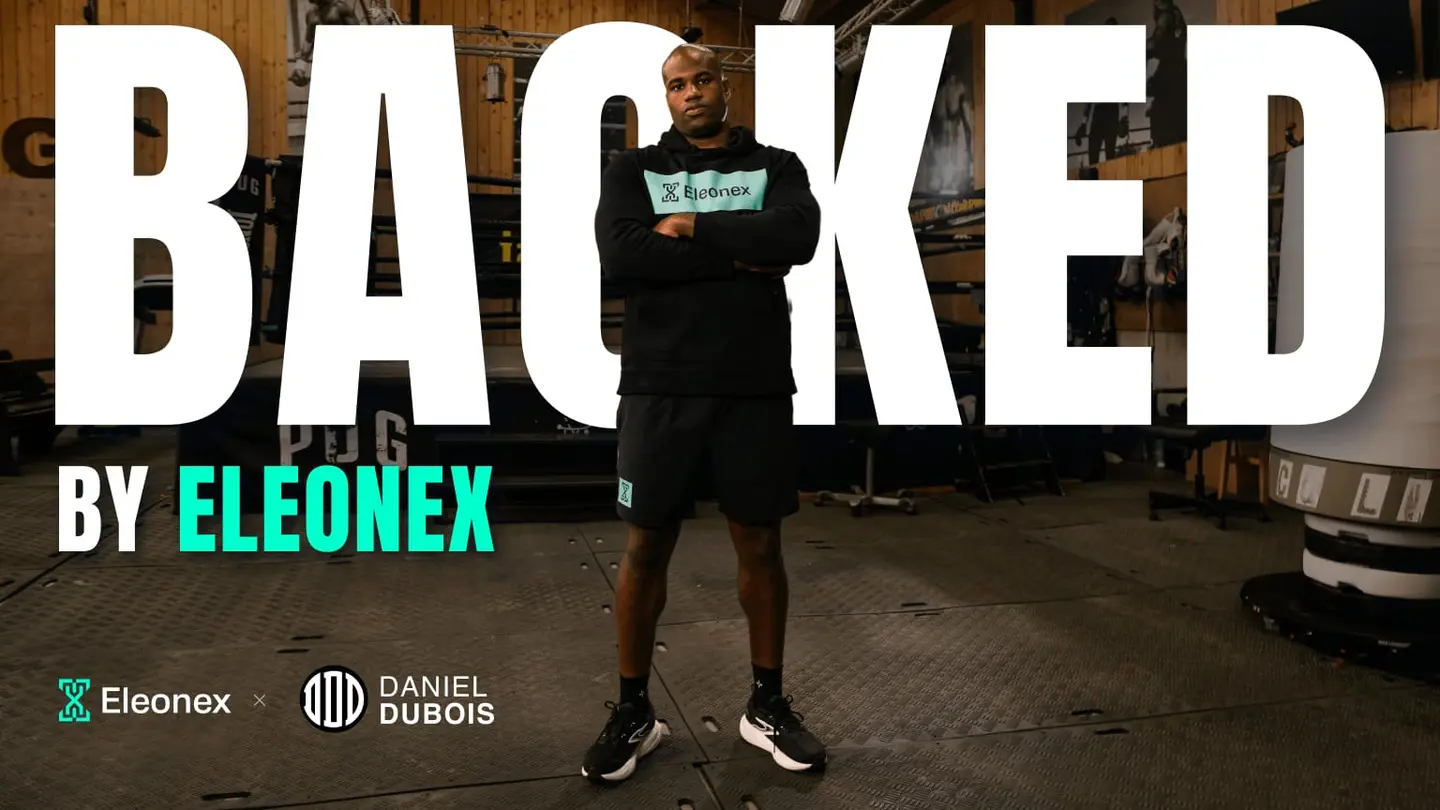
Prop Firm Eleonex Signs WBO World Heavyweight Champion Daniel Dubois as Brand Ambassador
The strategic move brings the Eleonex brand closer to a broader audience. Prop firm Eleonex recently inked a brand ambassador deal with British professional heavyweight…
Read More
- Company News October 12, 2026
Eleonex TradeLocker Partnership: New Trading Platform
Eleonex and TradeLocker are expanding the options available to traders, giving Eleonex traders access to TradeLocker as an additional trading platform. October 8, 2026 —…
Read More - Prop Trading October 12, 2026
What is Eleonex and how does its funded trading work?
Eleonex is a prop rietary trading firm that funds disciplined traders with up to $300K in simulated accounts and shares profits through a reward split.…
Read More


Stay Informed,
Stay Ahead
Bookmark this blog to keep your edge sharp. Whether you're prepping for your first challenge or scaling into a six-figure funded account, our insights are here to help.
