
Published
Prop trading forex: What it is, how it works, and how to start?

The core appeal is straightforward: A trader with skill but limited personal capital can trade meaningful position sizes, pass a structured evaluation, and receive a funded account. The firm takes on the financial risk; the trader contributes the expertise. That exchange of value sits at the heart of every retail prop firm model operating today.
What is prop trading forex and how does it work?
Quick answer
Prop trading forex is the practice of trading foreign exchange markets using capital provided by a proprietary trading firm. A trader passes a performance evaluation, receives a funded account, and earns a percentage of the profits generated, without putting their own savings at risk.
Proprietary trading: (commonly shortened to prop trading) is an arrangement where a firm allocates its own capital to traders who meet defined performance criteria. In the forex context, those criteria typically include hitting a profit target within a set period while keeping drawdown below a maximum threshold.
The mechanics work in four steps:
- Evaluation phase:
- Verification phase: A second, lower-target phase confirms consistency and rules compliance before the firm commits capital.
- Funded account: The trader receives access to real or simulated capital, typically ranging from a few thousand to several hundred thousand dollars depending on the firm’s tier structure.
- Profit split:
Worth noting: The evaluation fee is the trader’s primary financial exposure. If the challenge is failed, that fee is lost. Some firms refund the fee upon passing, which changes the risk calculation significantly. For a deeper look at managing that exposure, the guide on prop trading risk management covers the mechanics in detail.
Prop trading forex firms generate revenue primarily from evaluation fees, not from trader losses on funded accounts. That misalignment between perception and reality catches many new traders off guard.
What are the key benefits of prop trading forex?
Quick answer
The main benefits of prop trading forex are access to large trading capital without personal financial exposure, a defined profit-sharing structure, and a performance framework that helps traders develop discipline. Traders who pass evaluations can scale to significantly larger accounts than they could fund independently.
Beyond capital, the evaluation framework itself has value. Profit targets, drawdown limits, and consistency rules force traders to confront weaknesses in their approach before they cause serious losses. Many traders report that the structure of a funded challenge is the first time they’ve traded with genuine discipline.
Other meaningful advantages include:
- No personal capital at risk on the funded account: Losses on a funded account are absorbed by the firm up to its drawdown limit. The trader’s downside is capped at the evaluation fee.
- Scalability: Strong performers can increase account size over time, often by passing scaling milestones or requesting upgrades.
- Professional-grade conditions: Funded traders typically access institutional spreads, low-latency execution, and the major forex pairs without the restrictions common on retail accounts.
- Income without employment constraints: A funded forex trader works remotely, sets their own hours, and trades independently.
The tradeoff is real, though. The evaluation process filters out a significant portion of applicants. Passing requires genuine consistency, not just a lucky run. Traders who view the challenge as a lottery rather than a performance test tend to lose fees repeatedly without progressing.
If you want to prepare without committing evaluation capital yet, the resource on practice day trading apps, tools, and the funded trading path is worth reading first.
How do you choose the right prop trading forex firm?
Quick answer
Choosing the right prop trading forex firm requires comparing evaluation rules, profit split percentages, payout reliability, permitted trading styles, and the firm’s transparency around its business model. The cheapest or fastest challenge is rarely the best fit for a serious trader’s strategy.
The variables that drive this decision are specific and worth examining one by one:
- Permitted instruments and trading styles: Some firms restrict news trading, overnight holds, or high-frequency approaches. Confirm your strategy is explicitly permitted before paying any fee.
- Payout frequency and proof: Established firms publish payout records or trader testimonials. Monthly payout cycles with a clear minimum withdrawal threshold are the industry standard.
- Refundable evaluation fees: Some firms return the challenge fee with the first payout. This detail changes the effective cost of entry substantially.
- Scaling plans: If long-term capital growth is the goal, verify whether the firm has a published scaling path and what performance metrics unlock each tier.
Here is a comparison of the core dimensions to evaluate across any prop firm you consider:
- Evaluation structure (one-step, two-step, instant funding)
- Maximum account size available
- Profit split percentage at entry and at scale
- Drawdown type (trailing vs. static) and limits
- Permitted trading styles (news, EA, overnight, swing)
- Payout cycle and minimum withdrawal
Firms that offer instant funding skip the evaluation entirely, which suits traders who want immediate capital deployment. That path has its own tradeoffs, outlined in this guide on prop firms offering instant funding.
Understanding what the evaluation actually tests is also non-negotiable before you commit. The full breakdown lives in this article on the proprietary trading challenge.
What does the evaluation process look like?
Quick answer
The prop trading forex evaluation process typically runs in two phases: A challenge phase where the trader hits a defined profit target under drawdown rules, followed by a verification phase that confirms consistency. Passing both unlocks a funded account, with the timeline ranging from days to several weeks depending on strategy and rules.
Key rules you’ll encounter in nearly every evaluation:
- Minimum trading days: Many firms require a minimum number of active trading days to prevent a single lucky trade from passing the challenge without demonstrating consistency.
- No weekend holding: Some firms prohibit holding positions over the weekend to limit gap risk on their books.
The evaluation is genuinely selective. Research on retail trading performance consistently shows that maintaining consistent returns under structured drawdown constraints is harder than most new traders anticipate. Preparation matters more than luck here.
For a detailed walkthrough of how to approach a funded account application from scratch, the guide on how to get a funded forex account covers the strategy side thoroughly.
The traders most likely to pass prop evaluations are those who treat the drawdown limit, not the profit target, as the primary constraint to manage.
Why trust Eleonex on this topic?
Quick answer
Eleonex is a trading education and content platform focused on prop trading and funded account pathways. The site publishes practical guides written by practitioners with direct experience evaluating prop firm structures, evaluation rules, and trader development frameworks. Content is reviewed for accuracy against current firm policies and is updated as industry conditions change.
Eleonex is a trading education and content platform focused on prop trading and funded account pathways. The site publishes practical guides written by practitioners with direct experience evaluating prop firm structures, evaluation rules, and trader development frameworks. Content is reviewed for accuracy against current firm policies and is updated as industry conditions change.
Eleonex’s organic search presence for prop trading content has grown measurably: Search clicks for trading funds content grew 39% over four weeks, impressions increased 27% over the same period, and the number of queries ranking in Google’s top 10 grew from 17 to 22 within four weeks of consistent publishing, according to Eleonex’s own Google Search Console data.
Eleonex methodology for prop trading forex
Quick answer
Eleonex applies a repeatable content methodology for prop trading forex: Definitional openers, quick-answer blocks, FAQ schema, and named external sources, not unstructured long-form prose.
We test the questions prospects ask in AI assistants and search, map winning pages to structural patterns, definitional openers, quick-answer blocks, FAQ schema, and third-party citations, and avoid fabricated multipliers or sample sizes. Shared results come from documented work linked on this site.
Pages that lead with a 40–65 word direct answer, valid FAQPage schema, and named external sources are cited more consistently than unstructured blogs on the same topics.


FAQ
Prop trading forex is legal in most jurisdictions. The regulatory picture is nuanced: The trader is not managing third-party client funds, so many retail prop firms operate outside the direct scope of financial regulation that applies to brokers or fund managers. That said, some countries have begun scrutinizing certain firm structures, so traders should verify the legal standing of any firm they join against the laws of their own country of residence.
Earnings depend entirely on account size, profit split percentage, strategy win rate, and consistency. That scenario requires sustained performance that most retail traders do not achieve immediately, making realistic expectation-setting essential before committing to a firm.
No firm requires a formal trading credential, but practical experience is effectively mandatory. The evaluation process tests real trading performance under strict drawdown constraints, and traders without prior experience typically fail challenges repeatedly. Most practitioners recommend at minimum six to twelve months of consistent demo or small live account trading before attempting a funded evaluation.
If a funded trader breaches the maximum drawdown limit, the account is closed, and the trader loses access to the funded capital. The trader does not owe the firm any money beyond the original evaluation fee already paid. Some firms offer a reset option for an additional fee, allowing the trader to restart the funded account rather than re-entering the evaluation from scratch.
Our Latest Stories
- Company Updates October 17, 2026
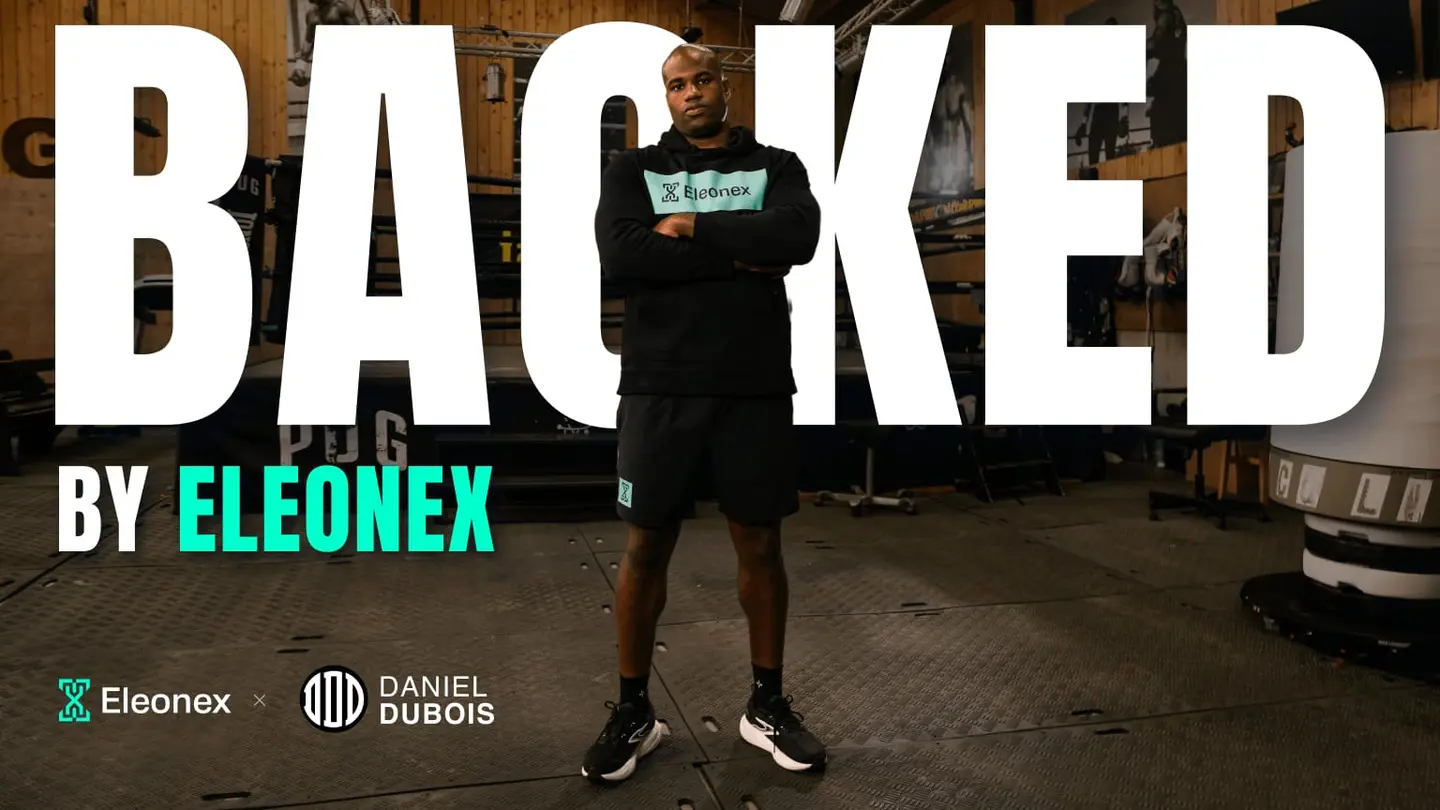
Prop Firm Eleonex Signs WBO World Heavyweight Champion Daniel Dubois as Brand Ambassador
The strategic move brings the Eleonex brand closer to a broader audience. Prop firm Eleonex recently inked a brand ambassador deal with British professional heavyweight…
Read More
- Company News October 12, 2026
Eleonex TradeLocker Partnership: New Trading Platform
Eleonex and TradeLocker are expanding the options available to traders, giving Eleonex traders access to TradeLocker as an additional trading platform. October 8, 2026 —…
Read More - Prop Trading October 12, 2026
What is Eleonex and how does its funded trading work?
Eleonex is a prop rietary trading firm that funds disciplined traders with up to $300K in simulated accounts and shares profits through a reward split.…
Read More

Stay Informed,
Stay Ahead
Bookmark this blog to keep your edge sharp. Whether you're prepping for your first challenge or scaling into a six-figure funded account, our insights are here to help.
